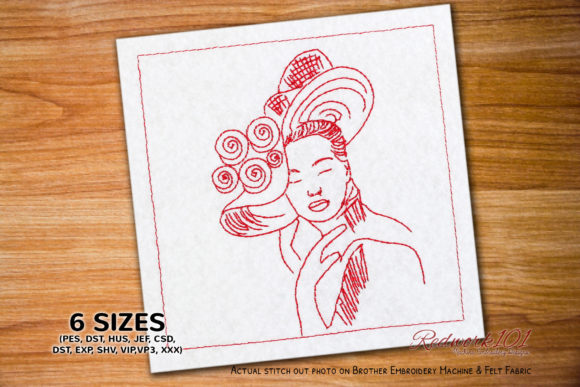
Woman with Floral Hat: A Redwork Embroidery Design Review
As an embroidery designer, every new digital file I test has to earn its place, especially when it’s destined for small business merchandise. The Woman with Floral Hat design immediately caught my eye because it’s described as a superb redwork embroidery that embodies elegance and charm. Redwork is a classic technique—single-color line art stitched with a simple running stitch, creating a delicate, vintage-inspired look. That alone tells me this design is meant to feel handmade, personal, and timeless. The optional box stitch adds a layer of versatility, but the real value lies in how this woman with floral hat motif can translate into a branded asset that gives a business a polished, artisanal identity.
First Impressions: Elegance and Charm in Redwork
Opening the file (or imagining it on screen), the first thing I notice is the silhouette. A feminine profile with a hat brimming with flowers—this is a design that leans decorative, romantic, and slightly rustic. It’s not a bold, sporty logo; it’s a whisper of charm. That makes it incredibly well-suited for brands that want to communicate warmth, creativity, and a personal touch. The redwork style means it will likely stitch out as a single color, traditionally red or a contrasting thread on a light ground. The description says “the color of” and then cuts off, so I’d check the actual file for thread color assignments. Redwork is forgiving because you can easily swap the thread to match your brand palette. Want a navy thread for a coastal boutique? Or a soft sage green for a plant shop? The design’s personality adapts while keeping its elegant linework.
The optional box stitch is a smart inclusion. If you’re aiming for a patch, the box stitch can create a neat, enclosed border that makes the patch feel structured. If you’re stitching directly onto a garment, you might leave it off for a more organic, sketched appearance. The first impression is professional yet not stiff—exactly the kind of asset that can elevate handmade or small-batch products.
Business Applications: Where Woman with Floral Hat Shines
I often advise small business owners to pick one signature motif and use it consistently across merchandise. The Woman with Floral Hat embroidery design is a prime candidate for that role. Because it’s categorized under Accessories, it’s naturally sized for accent placements. Here’s where I’d use it without hesitation:
- Embroidered patches – Stitch it on felt or twill, add a merrowed edge or use the box stitch, and you have a premium patch for hats, jean jackets, or tote bags. A florist could sell these as add-on iron-on patches with every bouquet delivery.
- Staff uniforms and aprons – A small chest embroidery on a cafe apron or bakery tunic gives a unified, handmade feel. The design’s elegance works perfectly for a tea room, patisserie, or boutique hotel with a romantic aesthetic.
- Cap embroidery – On the side of a five-panel cap or a dad hat, this profile motif adds a subtle, artsy detail. Just watch the curvature and size, which I’ll cover later.
- Tote bags and product packaging – A canvas tote with Woman with Floral Hat stitched near the corner becomes a reusable brand asset. It’s also a lovely accent on fabric pouches, zipper bags, or even the collar of a linen shirt sold by a handmade clothing brand.
- Customer gifts and event merch – For a creative studio, stitching this design on a small fabric keychain or a bookmark can become a memorable freebie that reinforces brand identity.
- Etsy seller branding – If you sell digital or physical products, this design can be your visual signature. Stitch it on thank-you cards, packaging inserts, or care instruction labels to build a cohesive look.
The design’s personality is flexible enough to suit a boutique florist, a vintage-inspired bakery, a handmade soap brand, a pet portrait studio, or even a stationery shop. The woman with floral hat motif immediately signals a love for nature, beauty, and femininity, so it aligns with businesses that celebrate those values.
Use with Care: Sizing, Fabric, and Texture Considerations
No design is perfect for every application, and redwork comes with its own set of technical caveats. The delicate lines that make this design so charming can also become its weakness if not handled correctly.
Small Patch Sizes
Scaling a redwork design below 2 inches can cause the thin lines to close up or become illegible. The floral details in the hat might merge into a blob. I always test stitch at the intended patch size on a scrap of the same fabric. If you’re aiming for a 1.5-inch hat patch, you may need to simplify the design or remove the box stitch to gain back some space.
Curved Surfaces
Cap fronts are tricky. The profile of the woman’s face and the hat brim could distort over the center seam of a structured cap. Place it on the side or the back of the cap instead. On a sleeve, the armhole curve can pull the design out of alignment; use a basting box or spray adhesive to keep the fabric stable.
High Stitch Density and Thin Lines
Redwork relies on a single run of stitches, so if the digitizer set the stitch length too short or the density too high, the thread can build up and cause puckering, especially on lightweight fabrics. I’d inspect the file’s stitch count and spacing before production. The optional box stitch might add density, so decide whether you need it based on the fabric.
Dark Uniforms and Fabric Texture
Traditional redwork shines on light, smooth fabrics. On a dark navy or black t-shirt, the single-color line art can look faint or get lost. You might need to switch to a thicker thread or use a contrasting color that pops. On textured fabrics like terry cloth or heavily slubbed linen, the lines can skip or look uneven. A crisp poplin, smooth denim, or midweight canvas works best.
Frequent Washing
Redwork stitches are delicate; repeated washing can cause the thread to fuzz or break. For items like work aprons, I’d use a durable polyester thread and a soft, no-show mesh stabilizer to protect the stitches. Always wash test one unit before a full production run.
Brand Identity: How a Small Embroidered Detail Builds Trust
When a customer sees an embroidered Woman with Floral Hat on a tote bag or a staff shirt, they don’t just see a pretty picture—they perceive care. Embroidery speaks of durability, craftsmanship, and intentionality. For a small business, that tiny detail can be the difference between a generic product and a memorable brand experience. I’ve seen bakeries use a simple floral motif on their packaging and suddenly their cookie boxes become Instagram-worthy. The same logic applies here.
This design works as a brand identity anchor because it’s distinctive. While a standard text logo is forgettable, a woman with a floral hat is a visual story. You can build a whole narrative around it—think of it as a mascot. Use it on your small business merch, your website header, your printed labels, and your custom apparel. The consistency reinforces recognition. Over time, customers will see that profile and instantly associate it with your shop’s quality and aesthetic.
Moreover, embroidered patches and stitched details increase perceived product value. A plain canvas tote might sell for $12; the same tote with a well-executed embroidered flower hat design can command $25 or more. It’s a simple upgrade that signals handmade, premium quality. For Etsy sellers and craft business owners, that upcharge can significantly boost margins.
Designer’s Practical Checklist for Woman with Floral Hat
Before you commit this machine embroidery design to a production run, I always recommend a thorough test. Here’s my personal checklist, built from years of stitching for small businesses:
- Test in black and white first. Print the design at 100% scale on paper. This reveals any spacing issues, overly thin lines, or areas that may close up when stitched.
- Check the stitch file details. Since the product description doesn’t specify exact stitch count, hoop size, or file format, open the digital embroidery file in your software. Confirm the dimensions, stitch count, and color stops. Redwork files often run best in a 4x4 or 5x7 hoop.
- Evaluate thread color contrast. The design is likely a single color, but choose a thread that contrasts well with your fabric. A tone-on-tone effect can look chic but may be too subtle for a logo. Always test.
- Stitch on real fabric. Use the exact same fabric you plan to use for custom apparel or tote bag design. A design that looks flawless on quilting cotton might pucker on a stretchy t-shirt.
- Use the right stabilizer. For woven fabrics, a medium-weight tear-away is often enough. For knits or caps, use a cutaway stabilizer to prevent distortion. The box stitch, if used, adds stability, so you might not need heavy backing.
- Create a printable mockup. Before stitching, overlay the design on a photo of your blank product. Show the client how the Woman with Floral Hat will look on an apron embroidery or cap embroidery. This prevents misaligned expectations.
- Compare with other design assets. If you’re blending this with a text logo or other graphics, ensure the styles are visually consistent. A modern sans-serif font might clash with the vintage redwork feel; a serif font or script would pair better.
- Confirm commercial licensing. The description doesn’t state the license terms, so double-check that the embroidery file allows commercial use on merchandise. If not, reach out to the designer or purchase a commercial license.
- Test wash and wear. Stitch on a sample, wash it five times, and see how the threads hold up. This is critical for items that will be laundered frequently, like staff uniforms.
- Document your settings. Once you find the perfect stitch-out, save the thread brand, stabilizer, and machine speed settings. This becomes your production recipe.
By following this checklist, you’ll turn a lovely embroidery design into a reliable commercial embroidery asset. The Woman with Floral Hat has the potential to become a recognisable signature for your brand—if you treat it with the same care you’d give any handcrafted product.