Eyeglass Case Capricorn Zodiac Sign: A Designer’s Honest Review
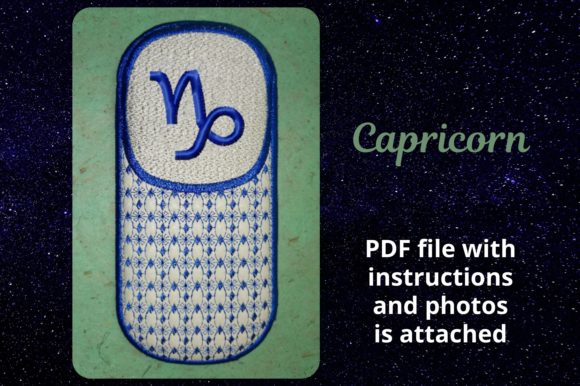
When I first scrolled past the Eyeglass Case Capricorn Zodiac Sign on Creative Fabrica, I paused. An in‑the‑hoop eyeglass case that doubles as a zodiac gift? As a machine embroidery designer who regularly stitches for handmade product lines, Etsy orders, and craft fair tables, this type of niche design immediately catches my attention. It promises a finished functional object — not just a flat patch — and that changes how I think about using it. The product description calls it “unusual” and “high-quality,” and I can see why. Right away, the visual mood reads as intentional, sophisticated, and surprisingly practical for a zodiac accessory. But before I add it to my next boutique collection or stitch it for a Capricorn friend’s birthday, I always run through a real‑world evaluation. Here’s how this embroidery file held up under that scrutiny.
First Impressions: The Visual Mood Tells the Story
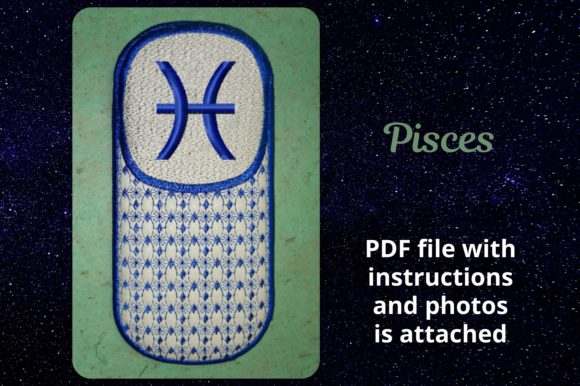
The design leans into a clean, structured look — much like the Capricorn personality itself. The linework feels deliberate, with a mix of decorative elements that frame the glasses case silhouette without overwhelming the functional purpose. I immediately pictured this stitched on a textured linen or a soft cotton twill, where the satin stitches and fill areas would really stand out. The zodiac iconography is present but not loud, which makes it far more giftable than a typical novelty embroidery. For a handmade product, that balance between decorative appeal and everyday usability is gold. The Eyeglass Case Capricorn Zodiac Sign doesn’t scream “craft project”; it whispers “boutique accessory.” That’s the kind of impression that builds buyer trust and encourages repeat customers.
What Kind of Project This Design Naturally Fits
Because it’s created using the in‑the‑hoop technique, this isn’t just a decorative embroidery file — it’s a full construction project. You’re not stitching a motif onto a pre‑made bag; you’re building the case itself inside the hoop. That instantly positions it in the Accessories category with a clear purpose. I could see this as a staple for:
- Small batch handmade gifts for Capricorn season (December–January)
- A personalized gift set combined with a matching embroidered keychain or bookmark
- Etsy listings where the zodiac angle drives seasonal traffic
- Craft fair products that sit at a higher price point than a simple patch
- Boutique merchandise for shops selling curated astrological accessories
It’s also a smart addition to a product photography lineup. A finished eyeglass case photographed with a soft‑focus background, maybe with a pair of reading glasses and a moon phase candle, creates a lifestyle image that sells itself. For anyone in the handmade or commercial embroidery space, that kind of visual storytelling is a powerful asset.
Evaluating Stitch‑Out Performance for Real Products
Before committing to a customer order, I always mentally test a design on the fabrics and use cases that matter most. Here’s where the Eyeglass Case Capricorn Zodiac Sign raises some important practical considerations.
Fabric Type and Stabilizer Choices
The in‑the‑hoop process means you’ll be hooping the base fabric and likely a lining, along with a stabilizer. For a glasses case, the final product needs enough body to protect the glasses but not so much stiffness that it feels like cardboard. I’d start with a medium‑weight cotton or linen for the outer layer, paired with a fusible midweight cutaway stabilizer. If you’re stitching on a textured fabric or a dark fabric, thread color contrast becomes critical. I’d take the extra step of testing the design on both a light cream and a deep charcoal swatch. The satin stitch elements need to pop clearly on the dark background, and the thin decorative lines can easily disappear if the thread color is too close to the fabric tone. Doing a quick test on scrap fabric is non‑negotiable here.
Hoop Size and Placement
The product description doesn’t specify the exact hoop size, so I recommend checking the Creative Fabrica product page for the required dimensions before you download. For an eyeglass case, you’ll typically need a hoop that accommodates the full flat shape, often a 5x7 or larger. If you only have a small hoop, this might not fit — and the in‑the‑hoop construction means you can’t easily split the design. Confirm the hoop size, then double‑check your machine’s maximum sewing field. Nothing derails a project faster than realizing mid‑stitch that the design exceeds your hoop’s boundaries.
Stitch Density and Tiny Details
Zodiac designs often include small symbols, and Capricorn is no exception. The sea‑goat emblem, maybe some tiny stars or lettering, will test the digitizing quality. I inspected the preview closely for stitch density in the finer areas. If the lettering is too small, it can become a tangled mess on anything but a perfectly smooth, non‑stretchy fabric. For a stretchy fabric like a knit, you’d need a crisp topper and possibly a slower stitch speed to prevent the letters from pulling in. I’d stay away from highly textured or plush fabrics for the outer case unless you’re prepared to lose some detail. The design’s personality relies on those clean lines, so fabric choice directly affects the finished product’s visual appeal.
Curved Surfaces and Unconventional Placements
Though this is an eyeglass case, I’m always thinking about how a design could be adapted. Could you use the front panel embroidery file alone on a tote bag design, a sweatshirt embroidery, or even a cap? Possibly. But the in‑the‑hoop case is a 3D object when finished, so the flat motif might be extracted and used elsewhere, provided the license allows it. If you plan to sell the finished item as anything other than the eyeglass case, double‑check the permitted uses on the product page. And if you do stitch the motif onto a curved cap surface, the registration will be trickier — the design was digitized for a flat plane, so expect some distortion on a dome.
Washability and Long‑Term Durability
An eyeglass case gets handled daily — tossed in a bag, maybe exposed to sunscreen or hand lotion. If you’re making these for sale, the handmade product needs to survive frequent use. I’d recommend pre‑washing the fabric to minimize shrinkage, and selecting a thread that holds up to light abrasion. Polyester embroidery thread is generally a safe bet. The stitch density in the satin areas should be checked; overly dense satin stitches can crack along the fold line of the case after repeated opening and closing. A careful test stitch on a foldable substrate will reveal if the design needs any density adjustments before you produce a batch.
How This Design Elevates Your Brand and Product Value
Adding a zodiac‑themed in‑the‑hoop project to your lineup does more than just fill a product slot. It signals to customers that you understand the demand for personalized, thoughtful gifts. A Capricorn eyeglass case is not a generic item; it feels curated. That perception directly boosts giftability and helps justify a higher price point at craft fairs or on Etsy. When I photograph the finished case, I’ll include a few thoughtful details: a simple kraft box, a handwritten card, soft natural light. That kind of presentation builds brand consistency and customer engagement. People who buy one zodiac case often come back for the other eleven signs, and that kind of repeat purchase potential is a business builder.
Practical Notes Before You Download and Stitch
I can’t stress enough the importance of verifying the Creative Fabrica product page details before you commit. Since the product description I have is brief, I don’t know the exact stitch count, included file formats, or supported hoop sizes. These are essential for a smooth production run. Here’s my standard checklist whenever I review a new machine embroidery design like this:
- Check the required hoop size and confirm your machine’s compatibility.
- Look at the file formats included (DST, PES, JEF, etc.) to ensure they match your embroidery machine.
- Review the licensing terms. If you plan to sell finished cases, make sure the license covers commercial embroidery use.
- Study the stitch map or preview for tiny lettering. If it looks questionable, plan a test stitch on a similar fabric.
- Choose thread colors that contrast well with your intended fabric. I often test a light and dark mockup side by side.
- Use a proper stabilizer. For in‑the‑hoop projects, I often use a tear‑away combined with a fusible woven for a clean finish.
- After stitching, inspect the small details: the closure area, any decorative stars, and the edge finishing. The final product should look crisp from every angle.
Final Thoughts on the Creative Fabrica Eyeglass Case
The Eyeglass Case Capricorn Zodiac Sign fills a specific niche with style. It’s not just an embroidered patch or a flat applique — it’s a complete, functional Accessories item that feels intentional and marketable. For an experienced embroidery designer, the in‑the‑hoop construction offers a satisfying project, and the end result is a product that feels far more substantial than its individual components. I appreciate how the design balances decorative detail with the practical demands of a daily‑use case. The zodiac theme is a proven seller, and Capricorn’s timeless, grounded aesthetic makes this design appropriate for a wide range of customer tastes.
If you’re looking to expand your handmade product line with a personalized gift option that photographs beautifully and stitches up cleanly, this Creative Fabrica embroidery file is worth a serious look. Just remember to do your due diligence: test the stitch‑out, confirm the licensing, and choose your materials to highlight the design’s strengths. When all those pieces align, you’ll produce a piece that your Capricorn friends — and your customers — will indeed appreciate for a long time.