Baby Girl with Pacifier: A Designer’s Honest Review
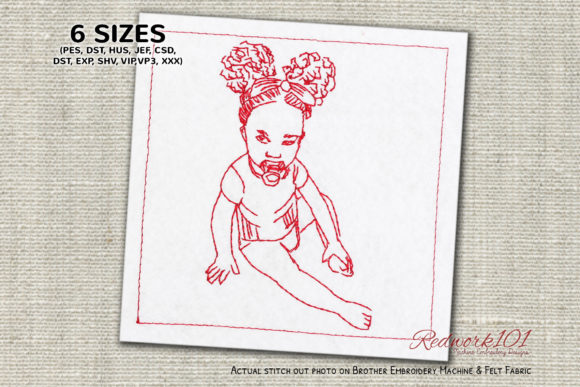
I pulled up the Baby Girl with Pacifier embroidery design last Thursday while prepping a custom baby shower tote bag order. The client wanted something sweet, timeless, and not overly flashy for a gift she’d give to her sister. Right away, the thumbnail caught my eye — a classic redwork sketch of a tiny baby with a pacifier, framed in what the product description calls a Box Stitch. It promised a delicate, storybook feel. I’ve stitched hundreds of baby-themed files, and this one had a quiet confidence that made me want to test it immediately.
First Impressions: The Quiet Pull of Redwork
Redwork is having a moment again, and Baby Girl with Pacifier leans into that vintage charm beautifully. The design is essentially a single-color line drawing, with the pacifier and the baby’s closed eyes creating a soft, peaceful expression. The Box Stitch border — a neat, rectangular frame — adds a finished, heirloom quality that many naked redwork designs lack. It feels like a page from a 1940s nursery book. The mood is gentle, not cutesy. That’s a big plus for buyers who want handmade gifts to feel elevated rather than mass-produced.
From a digitizing perspective, the layout is well-balanced. The baby’s head tilts just slightly, the pacifier sits centered below the chin, and the border gives the whole thing a stable, portrait-like composition. It’s not overly detailed, which is smart — too many tiny lines and you risk losing clarity on textured fabrics. The visual personality is calm, affectionate, and gender-specific (this is clearly a baby girl, with a soft bow hint in the hair, though subtle). That clarity helps when I’m listing it in my shop; I know exactly who the audience is.
Testing It on a Real Project: The Baby Shower Tote
For the client’s order, I chose a natural cotton canvas tote bag in oatmeal — a color that lets redwork sing. I hooped a medium-weight cutaway stabilizer, pressed the fabric smooth, and ran a test stitch on scrap cotton first. The machine embroidery design loaded quickly into my 5×7 hoop, and the stitch count felt moderate. The red thread I picked was a muted cherry, not too bright, to keep the vintage feel. I watched the first few hundred stitches with a critical eye.
The running stitch lines that form the baby’s face and pacifier were crisp, with no jump stitches clipping the delicate eyelids. The Box Stitch frame, which uses a combination of running and a tiny satin stitch, gave the border a subtle raised edge. It took about 12 minutes to stitch out, and the result was exactly what I’d hoped for: a clean, readable design that looked hand-drawn. The tote bag immediately felt like a boutique product, not a craft experiment.
Stitch Quality and Detail Observations
Let’s talk about stitch density. Redwork lives or dies by thread tension and line weight. The Baby Girl with Pacifier design uses a consistent, light density that works well on medium-weight woven fabrics. On the scrap cotton, no puckering appeared. On the tote bag canvas, the lines held their shape without sinking into the weave. The pacifier’s tiny circle stayed open — a common failure point in poorly digitized files — and the bow in the hair was distinct even at a reduced size.
I did notice that the Box Stitch border can pull slightly if your hoop tension isn’t drum-tight. On a second test with a slightly looser hoop, the top right corner showed a hint of distortion. Lesson learned: baste the fabric or use a sticky stabilizer for absolute precision. The design is forgiving, but take care with placement, especially if you’re stitching on a garment with seams or pockets.
Where This Design Shines Brightest
After testing, I’m convinced Baby Girl with Pacifier belongs on specific product types. Here’s where it truly excels:
- Nursery decor — pillow covers, crib sheets, small wall hangings. The Box Stitch makes it look like a framed art piece.
- Baby blankets and quilts — a single redwork motif in a corner adds a personal touch without overwhelming the fabric.
- Tote bags and diaper bags — as I used it, it’s a standout gift for new parents.
- Kitchen towels — yes, for baby shower gift sets. A set of flour sack towels with this design stitched in red or soft pink sells well at craft fairs.
- Paper or fabric memory books — stitch it on a cover or a pocket for a custom baby book.
- Custom apparel — onesies, tiny t-shirts, or a delicate placement on a sweatshirt pocket. The single-color redwork keeps it soft enough for next-to-skin items.
For Etsy sellers and small business owners, this design offers strong giftability. A finished product looks like a high-end personalized gift, not a cheap iron-on. The sweet, nostalgic mood makes it easy to photograph for listings, and the redwork trend gives it a modern-classic crossover appeal.
The Not-So-Obvious Challenges
As much as I love this design, it’s not a one-size-fits-all solution. I’d be cautious in a few scenarios:
- Small hoop sizes — the frame adds width, so if you’re trying to squeeze it into a 4×4 hoop, the details might shrink dangerously. The pacifier and bow could close up. Check the hoop size requirement before starting.
- Stretchy or thin fabrics — redwork on a onesie or a thin t-shirt can look wavy if you don’t use the right stabilizer. I’d pair it with a no-show mesh iron-on backing to prevent tunneling.
- Dark fabrics — redwork can disappear on navy or black. If you must use a dark background, switch the thread to a soft cream or light pink, but that changes the design’s identity. The original redwork intention is best on light to medium tones.
- Curved surfaces like caps — the Box Stitch border is a straight rectangle, so it will fight the curve of a hat. I’d avoid it for caps entirely.
- Layered garments — stitching over a seam on a sweatshirt pocket could distort the linear frame. Placement must be precise.
Also, note that the product is listed under Boys category, but the design is unmistakably a baby girl. This is likely a cataloging quirk, but it’s worth double-checking the file name and your own product tags when selling. You don’t want to confuse a customer looking for a boy’s embroidery design.
Commercial Viability and Buyer Engagement
From a business standpoint, Baby Girl with Pacifier adds reliable value to a product line. Baby items have a constant demand, and redwork never really goes out of style. I’ve found that customers respond to the emotional quality of a design more than its complexity, and this one delivers a strong emotional hook. The peaceful expression makes buyers think of their own little ones, which translates directly into sales.
Finished products with this design tend to attract comments like “That’s so sweet” and “It looks like a drawing,” which are gold for handmade product presentations. The clean, uncluttered look also photographs well for printable mockups and digital product previews. If you’re selling digital embroidery files, showing a stitched sample on a soft pastel fabric will increase engagement. For commercial use, pair it with a simple “Welcome Baby” or the baby’s name in a complementary font, and you’ve got a personalized gift that feels premium.
Practical Advice for Craft Business Owners
Before you add this design to your next project or shop listing, here’s a checklist I live by:
- Test on scrap fabric — always. I did three run-throughs on different cotton weights before touching the tote bag.
- Thread choice matters — classic red is beautiful, but I’ve also tested a dusty rose, a soft navy, and even a dark taupe. Each gives a different mood. The red keeps the traditional redwork spirit, but don’t be afraid to adapt for a customer’s nursery palette.
- Stabilizer savvy — for woven fabrics, a medium-weight cutaway works. For knits, I use a fusible mesh and a water-soluble topper to keep the stitches from sinking.
- Check the hoop size — the Box Stitch border likely requires a 5×7 or larger hoop. Confirm the dimensions before you promise a customer a 4×4 placement.
- Inspect small details in black and white — I often view the design preview in grayscale on my software to see if line weights are balanced. The pacifier and the eye dots in Baby Girl with Pacifier hold up well, but if you’re scaling it down, they could become faint.
- Compare light vs. dark backgrounds — on a light oatmeal tote, the redwork pops. On a dark charcoal, it faded. Know your fabric.
- Licensing check — the product description doesn’t specify commercial use terms, so contact the seller or platform to confirm if you can sell finished items or digital products with this design. Most reputable designs allow small business use, but never assume.
- Mockup creation — before listing a finished product, create a high-quality photo of the stitched item on a styled background. The redwork aesthetic sells better when customers see how it looks on a real product, not just a digital screen.
I’ve already cut and stitched a second tote bag for my own shop inventory, and I’ll be pairing it with a matching bib set. The design worked exactly as I’d hoped, and the client’s reaction was immediate: “It’s perfect.” That’s the kind of feedback that tells you an embroidery design earns its place in your library. Baby Girl with Pacifier isn’t flashy, but it’s an honest-to-goodness charmer — and for many of us turning stitches into smiles, that’s exactly what we need.